
💉
Project Overview
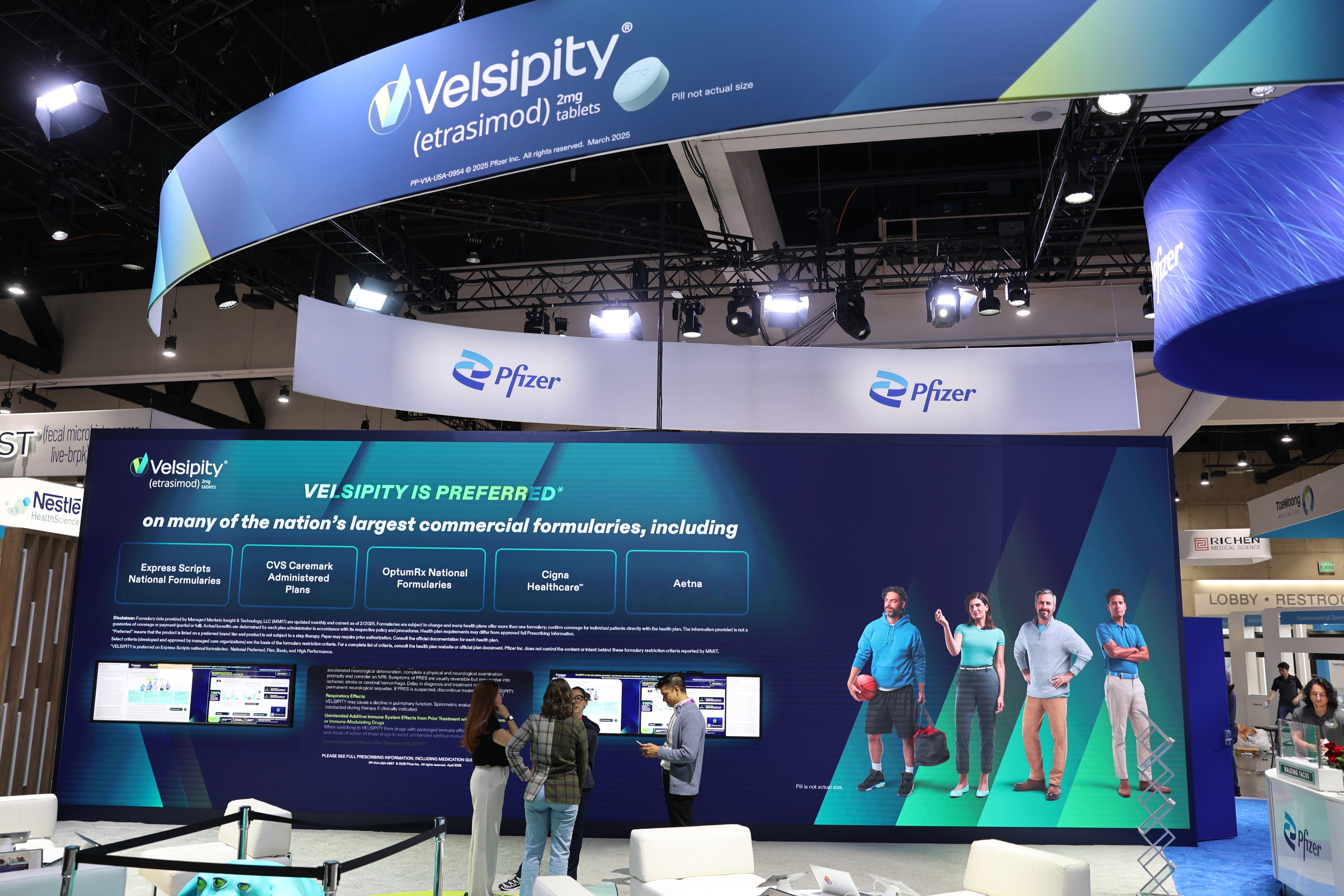
Pfizer Velsipity: Interactive Booth Experience
Ulcerative colitis affects 900K+ in the U.S. and 6.8M globally.
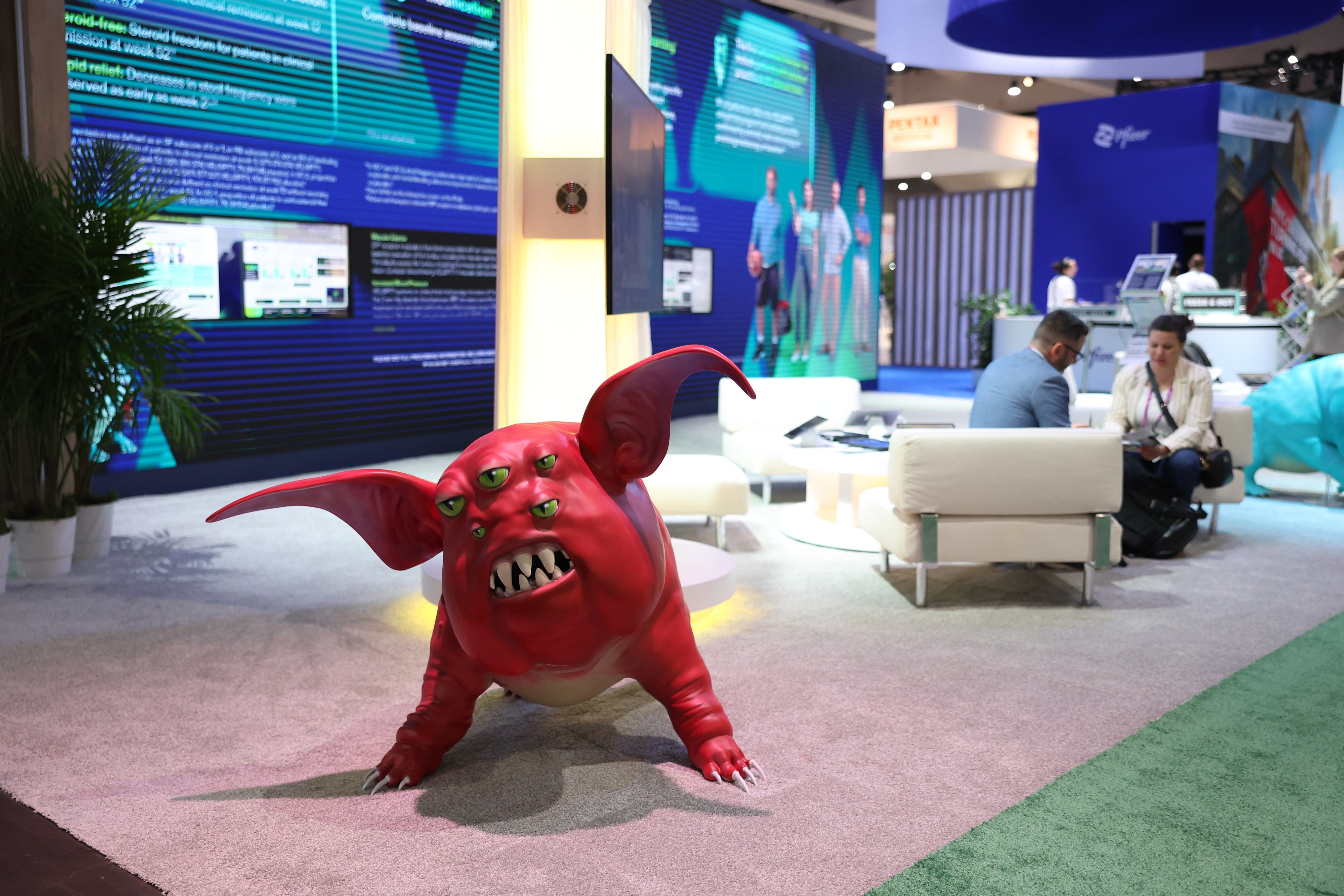
Our booth aimed to cut through the noise of a busy medical conference and deliver a data-rich yet digestible experience.
📋️
What Pfizer Needed
A booth that grabs attention from afar
An experience that encourages dwell time
A self-guided, educational flow
🔧
What we were working with
Tight timeline
No finalized content at kickoff
Limited access to key client decision-makers
Narrow panel format (87" x 27")
Complex medical data and charts

🚧
Constraints We Had to Solve
🗂️
Exploration Process
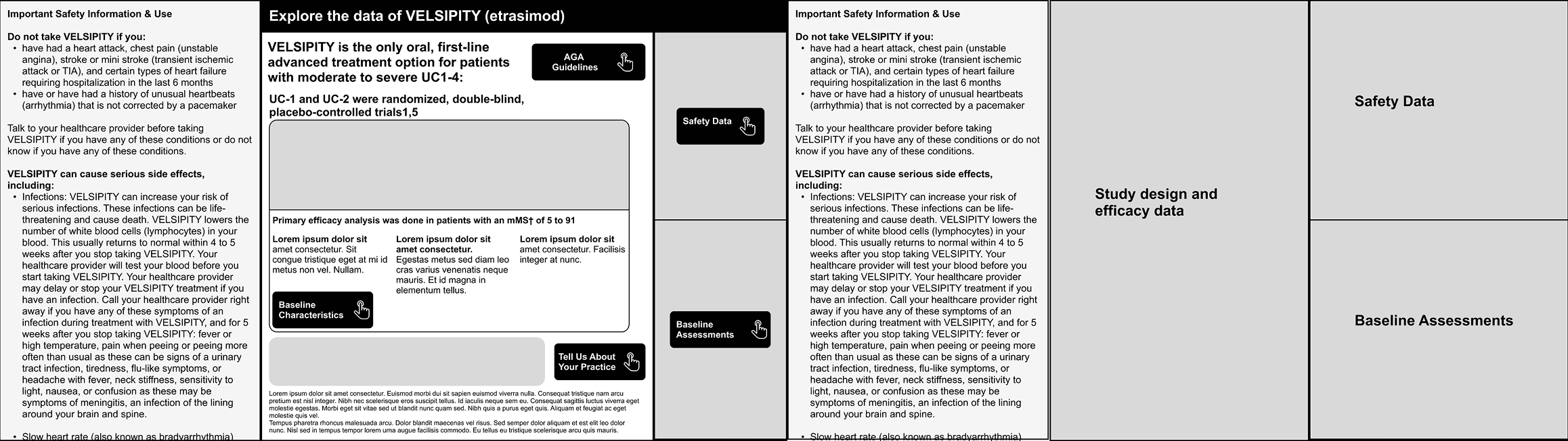
Phase 1: Dual-User Concept
Designed for two simultaneous users
Split-screen with dual ISIs (safety information)
Quickly discovered issues:
Cluttered UI
Over-reliance on overlays
Not enough content breathing room
Phase 2: Rethink & Simplify
Reduced to single ISI - on one side (from ~30% to 15–20% screen space)
Moved away from dual user model
Displayed more content directly
Client confirmed that HCPs are comfortable with dense data screens
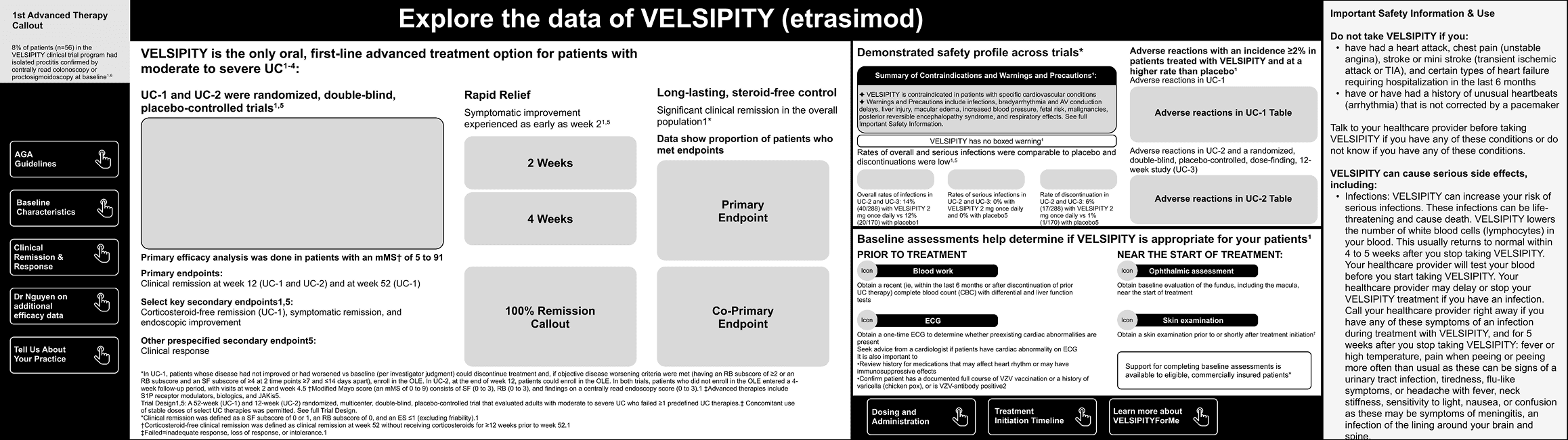
Final Wireframes
Unified experience
Toggle to switch between UC1/UC2 trials
Safety section reorganized for better legibility
Study design moved to overlay
Added section for Velsipity benefits and core messaging
✅
This wireframe was client-approved, setting the stage for visual design.
🎨
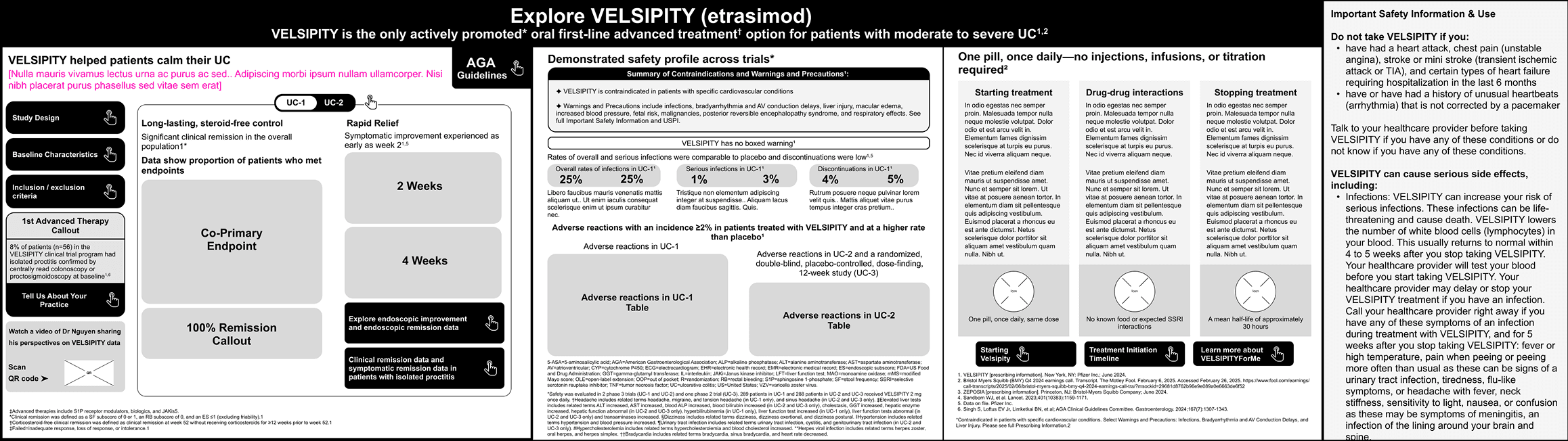
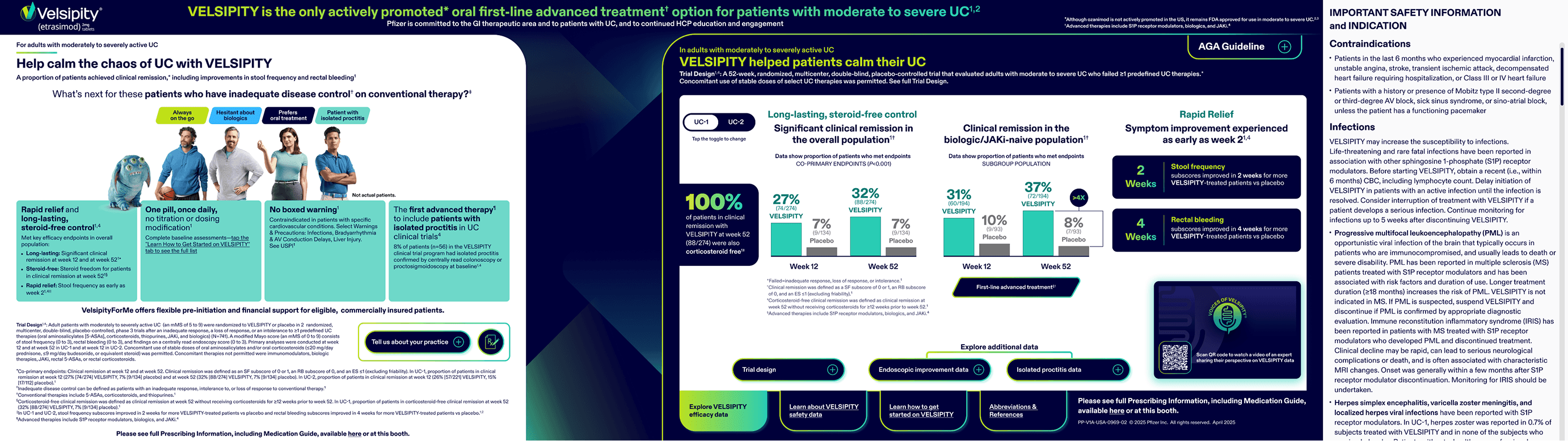
Layout Design: 4 Key Iterations
Version 1 – Initial Layout
Based on Pfizer branding at the time
Heavy gradients, blues and greys
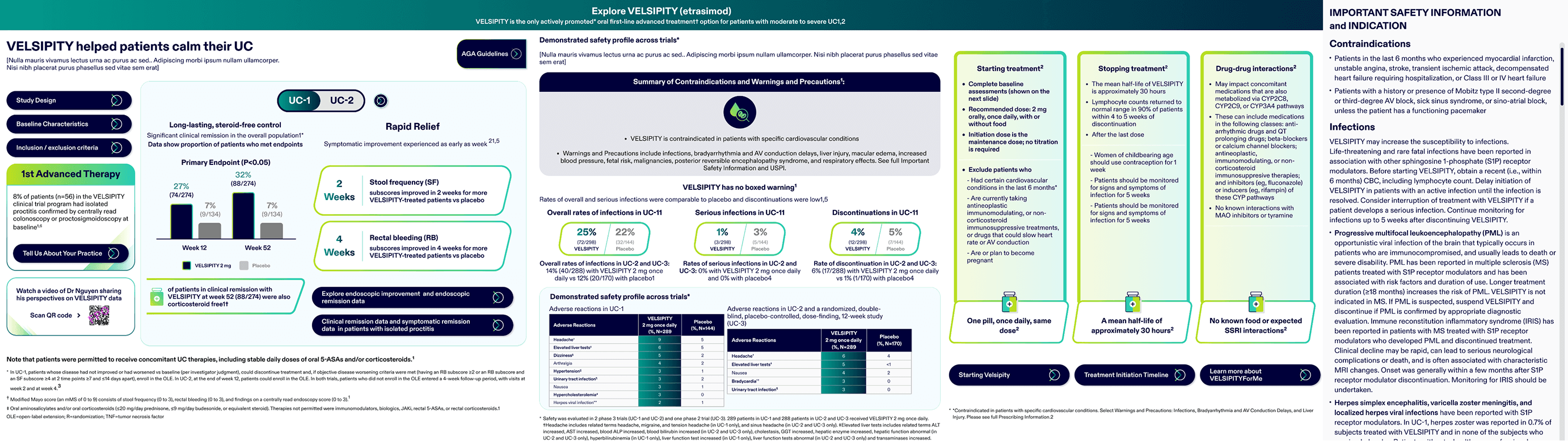
Version 2 – Branded Sections + Better CTA Focus
Introduced visual separation using branded elements
Highlighted CTA buttons ("QR code", "Tell us about your patients")
Reduced overlay clutter
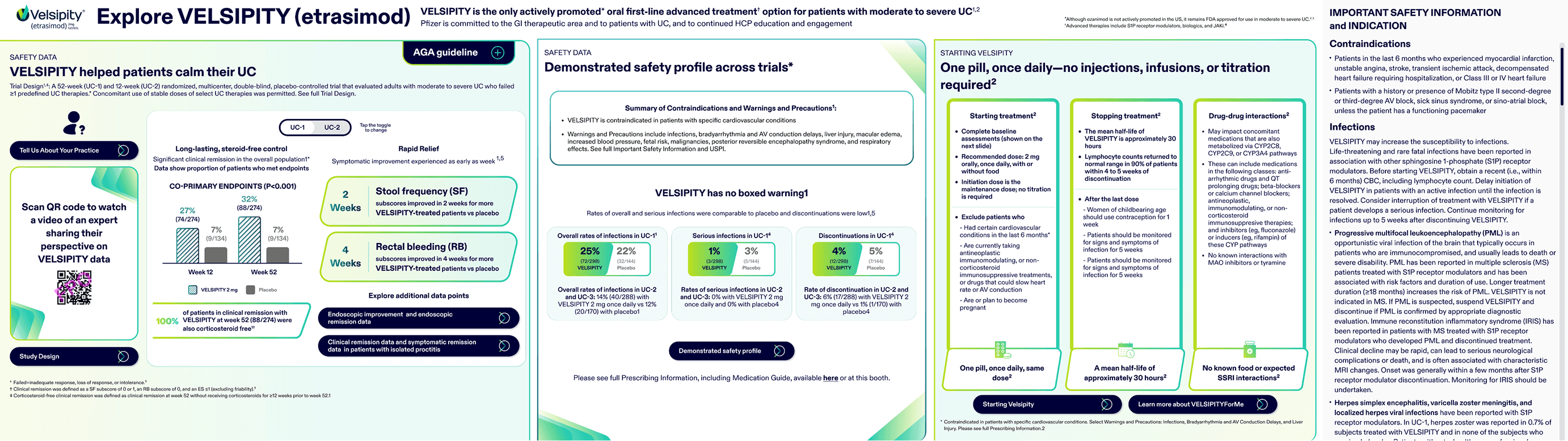
Version 3 – Aligning With Client's Visual Language
More navy blues, fewer gradients
Visual rhythm guiding user left to right (dark → light)
Adapted the layout to reflect Pfizer’s existing visual identity, ensuring consistency across booth, social, and digital touchpoints
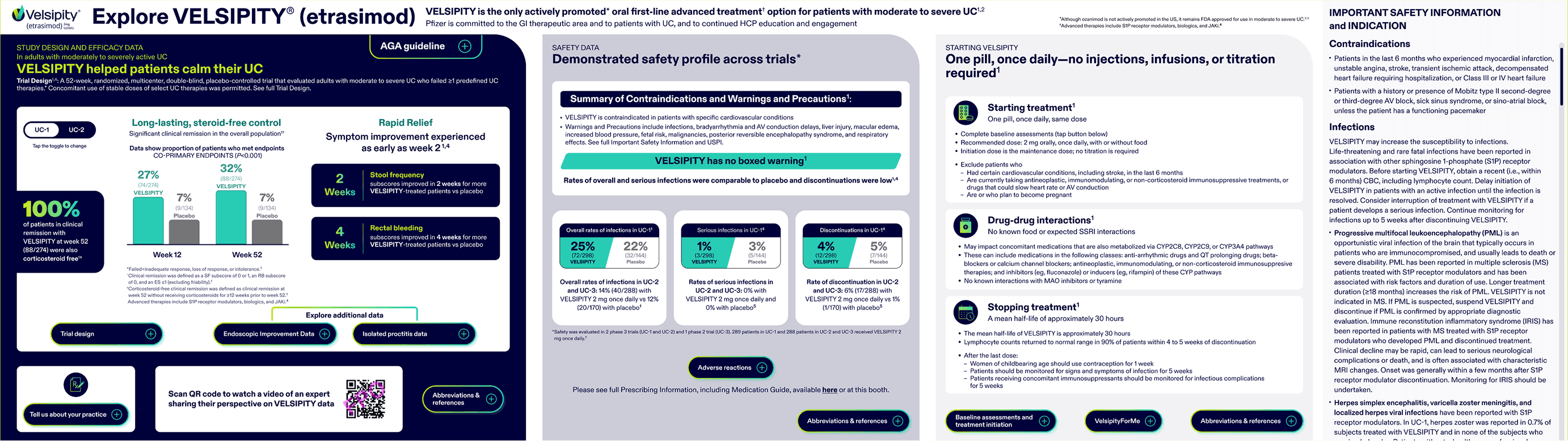
Version 4 – Final Client-Driven Layout
Simplified interaction zone → focused on right side of screen
Highlighted “Why Velsipity” as main screen message
Brought gradients back subtly in the background
✅
This layout was client-approved, setting the stage for development.
📱
Parallel Project: iPad Tool
Extending the Experience to Individual Interactions
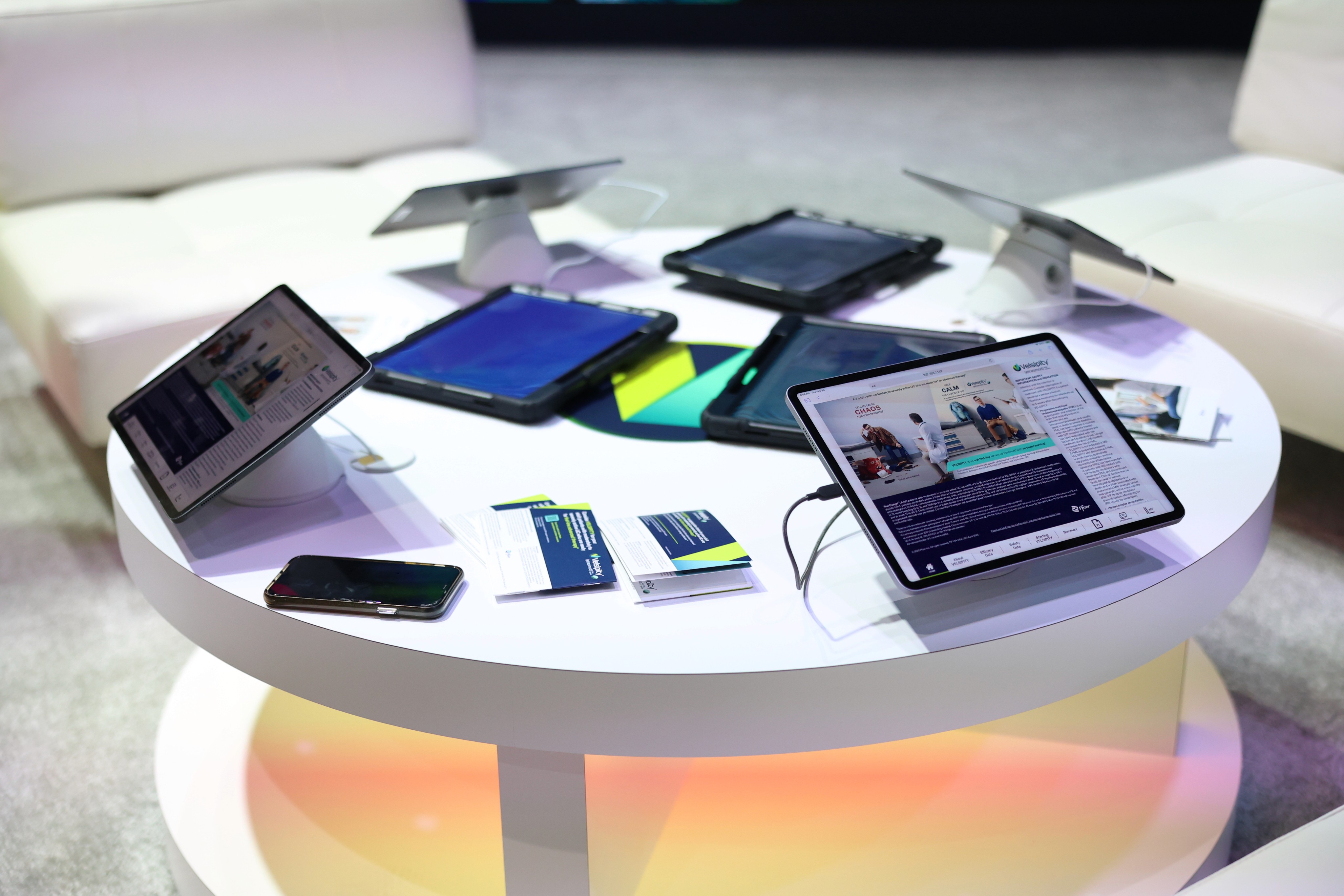
While finalizing wall panels, we also developed an iPad version for deeper 1-on-1 engagement at the booth.
Managing both simultaneously was a major coordination effort, but they worked well together.
🖥️
44,691
Impressions
⏱️
13.1 min
Avg Dwell Time
🚶️
22,973
Walk-bys
👋
1,446
Walk-ins
䷍
54
Sessions
📈
Performance & Metrics
How Healthcare Professionals Engaged with Our Experience
Event: Digestive Disease Week, San Diego — May 3–6, 2025
Attendees: 13,424 total (12,388 in-person, 1,036 virtual)
📱
Observations & Industry Insights
Beyond the Booth: Why Human Connection Still Matters
Despite the metrics, our team observed many booths with digital kiosks that remained unused.
Insight: HCPs may value human interaction over digital tools — even well-designed ones.
This raised a critical UX question:
🛠️️
Post-Event Iteration
Repurposed for the ACG Conference — Minor Tweaks, Same Core Experience
For a second conference, we made tweaks:
Enlarged QR codes (users struggled to scan them)
Added ACG guidelines (previously only had AGA)
Adjusted toggles and overlays without major layout shifts
Client opted to retain visual structure — they liked the visibility from afar
Still, I believe a more simplified, key-message-first version would have driven stronger results for quick-scan behavior at conferences.
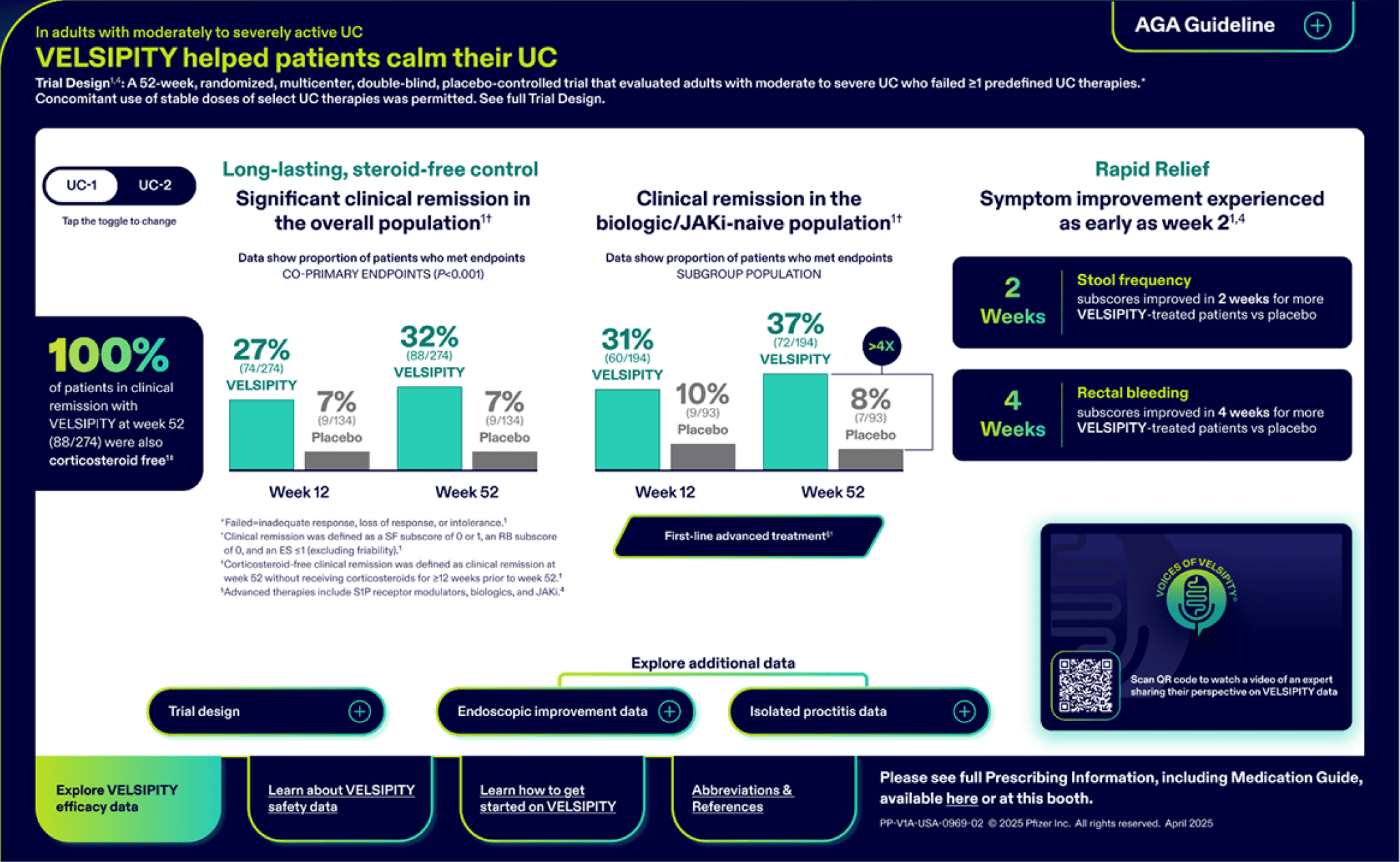

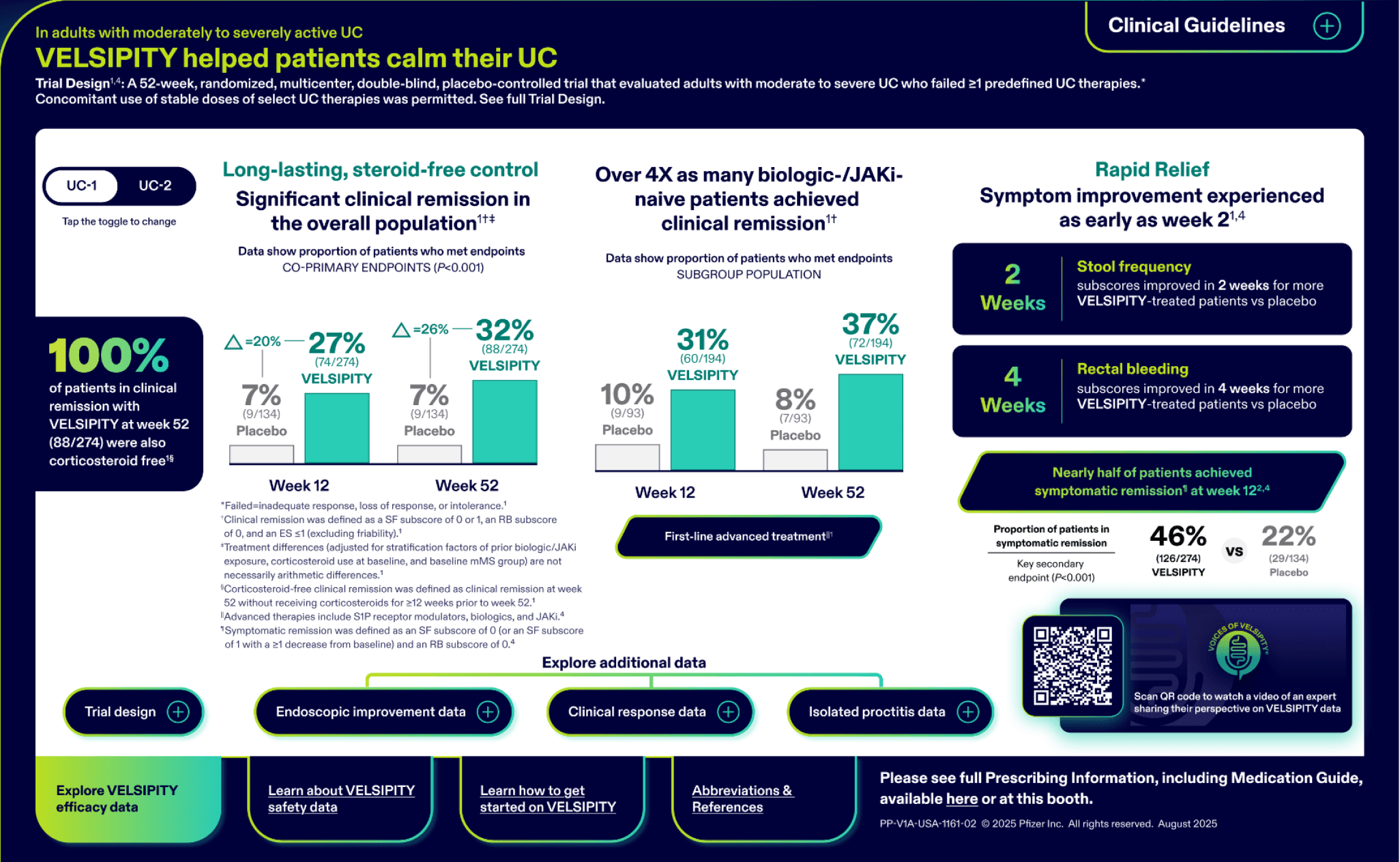
Shown here is the enlarged QR code, adjusted to address user feedback. Additional refinements were made to internal screens, which are not included in this view.
🤝
Collaboration Reflections
What I Learned About Process
Team Communication
Clear communication avoids friction and confusion
Regular updates and terminology alignment matter
Cross-functional Collaboration
Early involvement leads to fewer surprises
Leverage team expertise for faster alignment
Client Communication
Be transparent about progress, blockers, and limitations
Consolidate feedback into actionable summaries
🏆
Final thoughts
This project tested our ability to design under constraints while balancing client vision, user behavior, and technical limitations. It highlighted the importance of clarity, iteration, and thoughtful digital UX — especially in physical environments where attention is scarce and competition is high.
Still, we delivered an interactive experience that resonated — and got Pfizer to call us back.
More Projects
HMB Awareness
Empowering black women facing heavy menstrual bleeding (HMB) through an awareness campaign that leverages AI technology.
Skills: Qualitative + quantitative research, generative AI, team collaboration, concept development
Read More >
Cobenfy - BMS
Designed a responsive website for Cobenfy, a groundbreaking schizophrenia medication launched by Bristol-Myers Squibb.
Skills: Built a UI kit from scratch, chatbot design, managing challenging stakeholders
Read More >